
Every year, CEBA Summit (Corporate Energy Buyers Association Summit) provides terrific opportunities for energy leaders to meet, discuss trends and challenges, and explore solutions and exciting possibilities. This year’s Summit took place in LevelTen Energy's hometown of Seattle, and our Customer Engagement team was out in force — attending sessions, hosting events, speaking on a wide array of panels, and meeting with customers. As always, insights and learnings abounded.
Here are our five biggest takeaways from 2026's CEBA Summit.
1. Clean Energy Procurement Remains Strong — Driven By a More Concentrated Group of Buyers
2025 was a record-breaking year for US corporate clean energy procurement, with CEBA's deal tracker reporting 27.3 GW of contracted capacity. The corporate buying charge has continued in 2026, with more than a dozen gigawatts of clean capacity contracted for thus far.
However, high PPA prices and uncertainty around Greenhouse Gas Protocol revisions have some C&I buyers waiting on the sidelines. CEBA noted a 40% decline in the total number of unique buyers in the market in 2025 compared to 2024, indicating that even while total procured capacity grows, the numbers are being driven by a smaller group of buyers compared to prior years.
That said, corporate demand for clean power remains strong, and many C&I buyers are seizing the moment to secure volumes from tax-credit-qualified projects while supply remains. And among tech companies and data center players, procurement appetite has perhaps never been higher. Across the data center segment, appreciation is growing for the many benefits clean-power portfolios can confer — from potentially accelerating interconnection timelines, to easing community engagement and providing accredited capacity through aggregating wind, solar, storage, demand-response, and VPP resources.
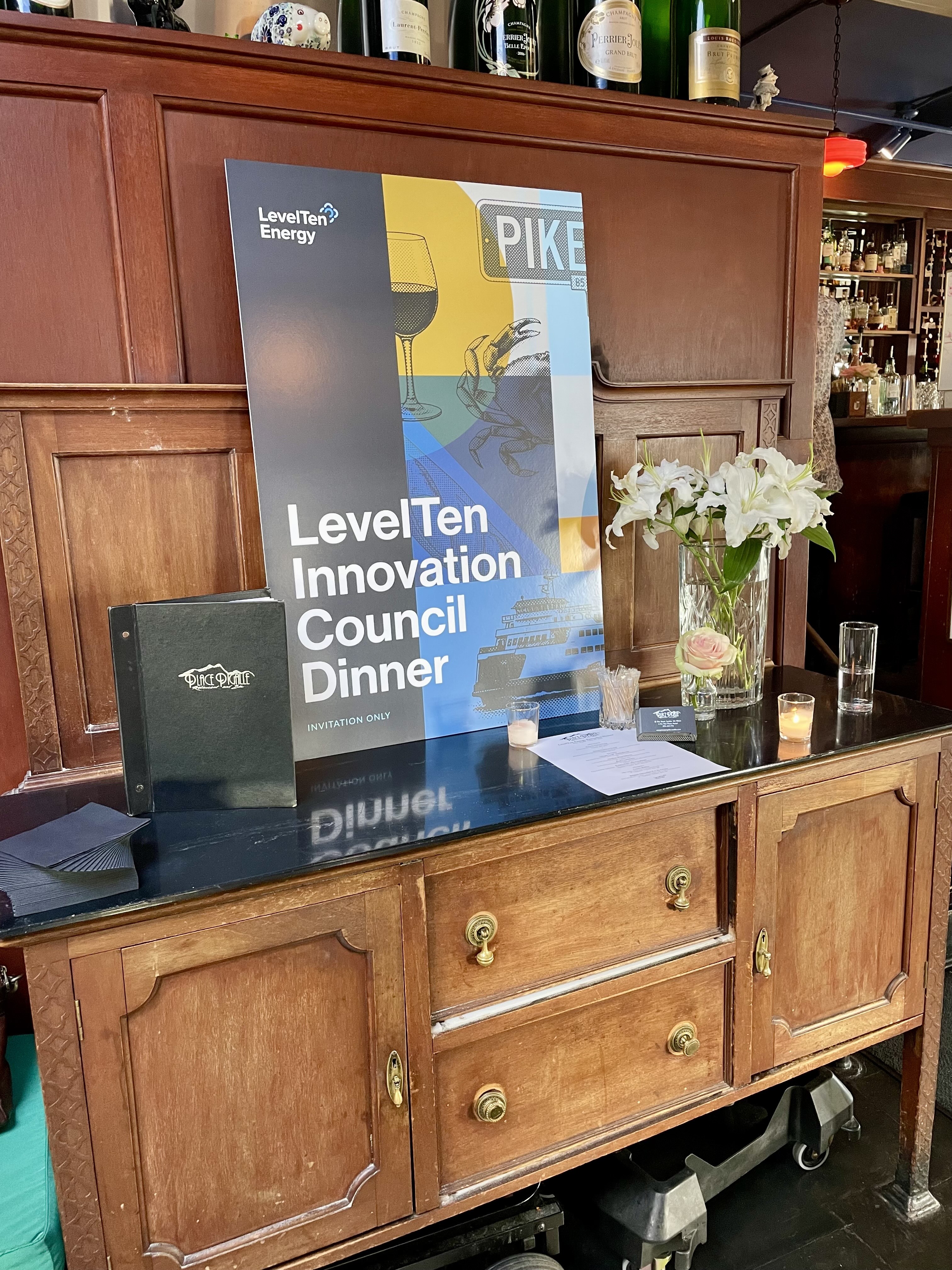
Finding solutions to imposing challenges — like sustainably powering the data center boom — has always been core to corporate sustainability efforts. In this spirit, LevelTen convened senior leaders from large energy buyers and developers at our third annual Innovation Council Dinner for an in-depth conversation on how surging energy demand is reshaping the clean energy market. We are grateful to the parties that joined us, and look forward to continuing the conversations that drive innovation in the energy space.
2. Clean Power Technologies Have Become More Than Just a Sustainability Play
Contracting with wind, solar, and storage assets is no longer just a means of securing RECs to meet voluntary sustainability goals. As demand for power expands rapidly across the US and a growing number of large loads seek to interconnect to the grid, buyers are leveraging clean-power technologies to aggregate accredited capacity resources, hedge power prices, and ensure greater resilience across their operations.

Connor Valaik, Senior Transactions Manager at LevelTen, explained how storage specifically can support the accredited capacity needs of data centers and bolster PPA economics in volatile markets during the Summit's "Putting storage to work for corporate decarbonization" session. In markets like ERCOT, corporate energy buyers have started to turn to BESS opportunities like TBx to buoy the financial performance of their PPA portfolios. For those interested in learning more about these use cases, LevelTen's "Faster and Cleaner" and "Hybrid for Everyone" articles provide deep dives from our industry experts.
The bottom line? Corporates that appreciate how clean technologies have matured are leveraging them to further critical operational and financial needs.
3. Market Expansion Is Top of Mind
Excitement around the potential of new domestic and international markets was a common theme throughout the week. As SPP expands west and CAISO extends its operations as well, the mountain west is already seeing improved liquidity and rising PPA potential as organized markets grow. While fewer than 10% of corporate procurements occurred in the WECC footprint between 2014 and Q1 2026 according to CEBA, the coming years may see the region become an exciting new frontier for corporate buyers. LevelTen has seen growing demand for pricing data from regulated markets like WECC, and has started producing monthly Market Transparency Reports to meet this growing need.
.jpg)
Discussion also abounded around expanding PPA activity in the Asia-Pacific (APAC) region. Many corporate buyers, including major tech companies, are looking to decarbonize substantial manufacturing and operational footprints in APAC countries like India, Japan, and South Korea. While evolving regulatory conditions and policy frameworks present a diverse landscape of PPA-market readiness, corporate appetite to engage in APAC markets continues to grow. LevelTen Chief Innovation Officer Jason Tundermann spoke to the importance and potential of expanding international PPA markets at the Summit's "Deep dive into energy markets around the world" session.
4. Buyers Taking Action Are Bolstering Future Success
Procuring in today's PPA market is far from straightforward. PPA prices have surged in recent years alongside immense regulatory uncertainty and policy flux. The OBBBA's aggressive phase-out of tax credits for wind and solar projects has placed a meaningful cap on the number of assets that can secure the federal tax credits that are key to project financing. Without these credits, PPA prices are essentially guaranteed to continue rising in the coming years — especially into 2028 and beyond.
Tax-credit-qualified project supply is still relatively strong, but each passing week sees more of this capacity contracted for. With tech companies and data center developers procuring aggressively, other corporate players that take action today are helping to safeguard their future needs.
While today's market can feel complex and overwhelming, LevelTen has extensive experience supporting a wide variety of corporate entities in finding PPA success. Sarah Wolf, LevelTen Director of North American Transactions, provided buyer attendees with a rundown of PPA procurement best practices to help ensure their transactional success during the Summit’s "Corporate Clean Energy Procurement Fundamentals" session.
5. Monitoring PPA Performance Is Hard — But Doesn't Have To Be
CEBA's deal tracker figures drive home the enormous volumes of clean energy corporate buyers have helped bring online in the US. As more signed contracts turn into active projects with real financial and operational performance to oversee, buyers’ ability to actively — and accurately — monitor their PPA portfolios has become a growing concern.
Liza Reines, Operations Business Line Leader at LevelTen, helped assuage portfolio-performance anxieties at the Summit’s "You have a PPA (or several)... now what?" roundtable discussion. LevelTen's Performance Monitoring tool ensures corporate offtakers can easily understand their PPAs' performance with granularity and confidence, without getting buried in spreadsheets and being encumbered by manual processes. As PPA portfolios grow and market conditions remain dynamic, scalable approaches for monitoring portfolio performance will prove essential.
Looking Ahead
Every CEBA event provides important opportunities for the industry to connect, problem-solve, and collectively forge the future of clean energy procurement. This year proved no different, with ample discussion and debate on evolving market dynamics, shifting policy conditions, and opportunities emerging in markets at home and abroad. We look forward to continuing the inspiring conversations the 2026 Summit sparked among the CEBA community, and all others committed to pushing the energy transition forward.

.png)